
Graduate Inflation

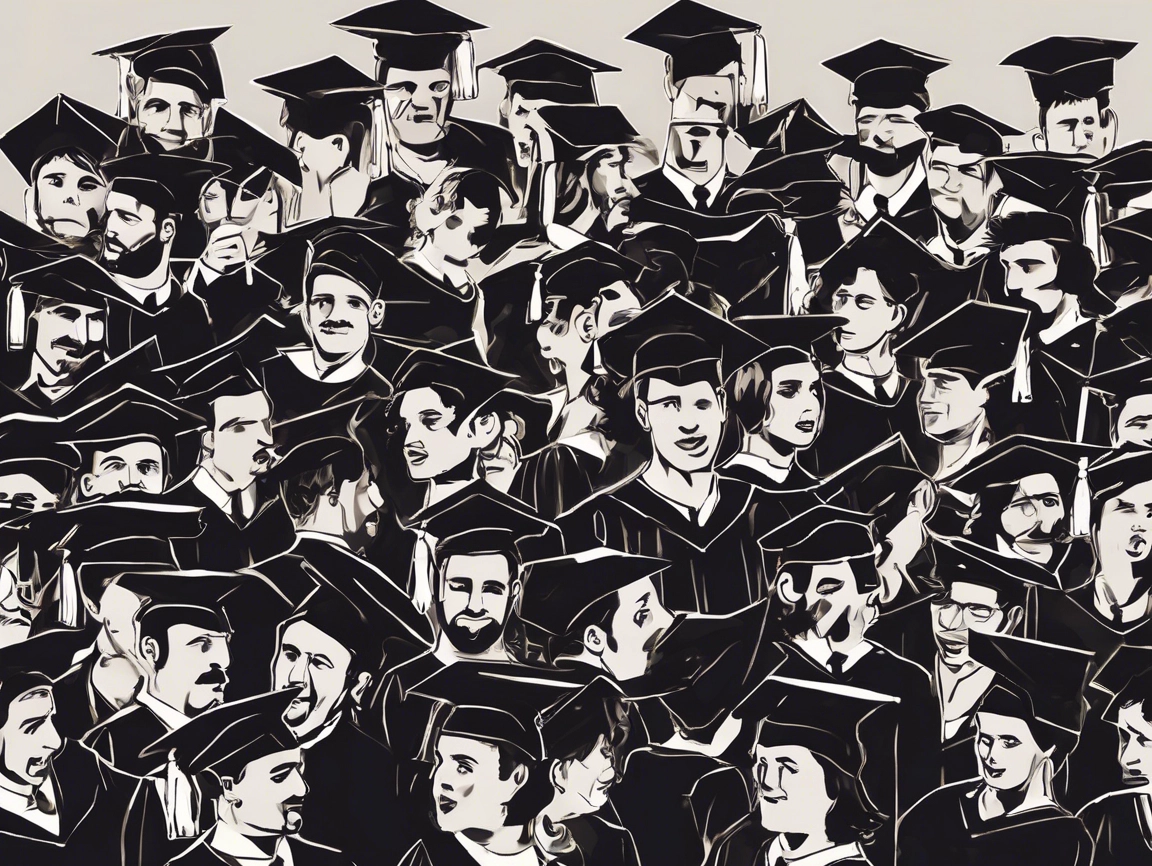
There was a time when being a university graduate in Turkey was almost like owning a gold bracelet—something that guaranteed security. In the 1980s and 1990s, holding a bachelor’s degree was not only an academic achievement but also a symbol of upward social mobility and a safe future. University graduates were relatively few, and demand for educated labor was high. That picture has now fundamentally changed. So what is “graduate inflation,” and where does it come from?
The term “graduate inflation” first appeared in Anglo-Saxon academic literature in the mid-20th century. It refers to the decline in the labor-market value of a university degree as the number of graduates rises rapidly.
In post-industrial Europe, higher education was once a privilege reserved for a small elite. From the 1960s onward, however, Western Europe and the United States entered a phase known as the massification of higher education. The goal was to extend university education to broader segments of society. While this increased social mobility in the short term, it reduced the distinguishing power of a bachelor’s degree in the labor market over the long run.
In Turkey, this process accelerated particularly after the mid-2000s. Under the “a university for every province” policy, the number of universities exceeded 200 and enrollment quotas expanded rapidly. The economic structure and employment opportunities, however, did not grow at the same pace. Today, the number of graduates from Business Administration alone exceeds one million. When similar fields such as Economics, International Trade, and International Relations are added, the scale of the problem becomes even clearer.
The result: a diploma is no longer a guarantee
The impact of graduate inflation is evident:
-
Many young people work in jobs unrelated to their degrees, often for low wages.
-
The number of unemployed university graduates continues to rise.
-
The social prestige and economic return of holding a university degree are declining.
Where does Europe differ?
In Europe—especially in Germany—university quotas are determined in line with the country’s economic needs. There is no approach such as opening a university in every city or placing a Business School in every institution.
Germany strongly supports vocational high schools (Berufsschule) and universities of applied sciences (Fachhochschule). The Ausbildung system is a three-year post-secondary vocational training model that integrates young people directly into the labor market by combining theory and practice. Vocational education there is not seen as a “fallback option for those who fail,” but as a deliberate and respected choice.
Moreover, obtaining the Meister qualification in Germany grants the right to enter university (Hochschulzugangsberechtigung). In other words, someone who reaches master-level expertise in a profession can continue into academic education if they choose. This allows two-way mobility between vocational and academic tracks.
The perception problem in Turkey
In Turkey, vocational high schools and vocational colleges are often viewed as places for “low scorers.” Yet one of the most effective ways to curb graduate inflation is to make these institutions attractive and respected. Without building a strong cadre of technically skilled and practice-oriented professionals, it is impossible to solve graduate unemployment.
So what should students do?
-
Clarify your goal.
Answer the question “What profession do I want?” before starting university. Consider both your interests and labor-market demand. -
Question the necessity of a four-year degree.
In fields such as technical services, healthcare, or IT, two-year associate programs can bring you into the workforce much faster. -
Develop your skill set.
Foreign languages, technical knowledge, communication skills—identify what your field requires and work on those gaps while you are still a student. -
Gain practical experience.
Internships, volunteer projects, part-time work. Theory alone is not enough. -
Build connections.
Be active in your sector, meet people, join professional communities. -
Keep learning.
What you know today may be obsolete in five years. Staying current is the key to a sustainable career.
A diploma is a starting point, not a finish line
Graduate inflation is not only the result of individual choices but also a reflection of state education and economic policies. Still, this does not mean young people are powerless. Seeing the diploma as a tool rather than a destination—and supporting it with skills and experience—is the only way to stand out, both professionally and personally.
Remember: a diploma may open the door. What gets you through that door is what you can actually do.
Ilker Yildiz
Political Scientist | Higher Education Consultant
